How AI Blood Test Interpretation Is Closing the Gap Between Lab Results and Patient Understanding
Laboratories around the world perform billions of blood tests every year, yet a large share of those results are never truly understood by the people they describe. A standard lab report delivers numbers, units, and reference intervals — but it rarely explains what those numbers mean together, how they have changed since the last test, or which findings deserve a conversation with a doctor. This is the interpretive gap that modern AI-assisted interpretation is now addressing. Instead of treating each biomarker as an isolated data point, a new generation of tools reads the full picture: relationships between markers, trends over time, and clear plain-language guidance for patients and clinicians alike.
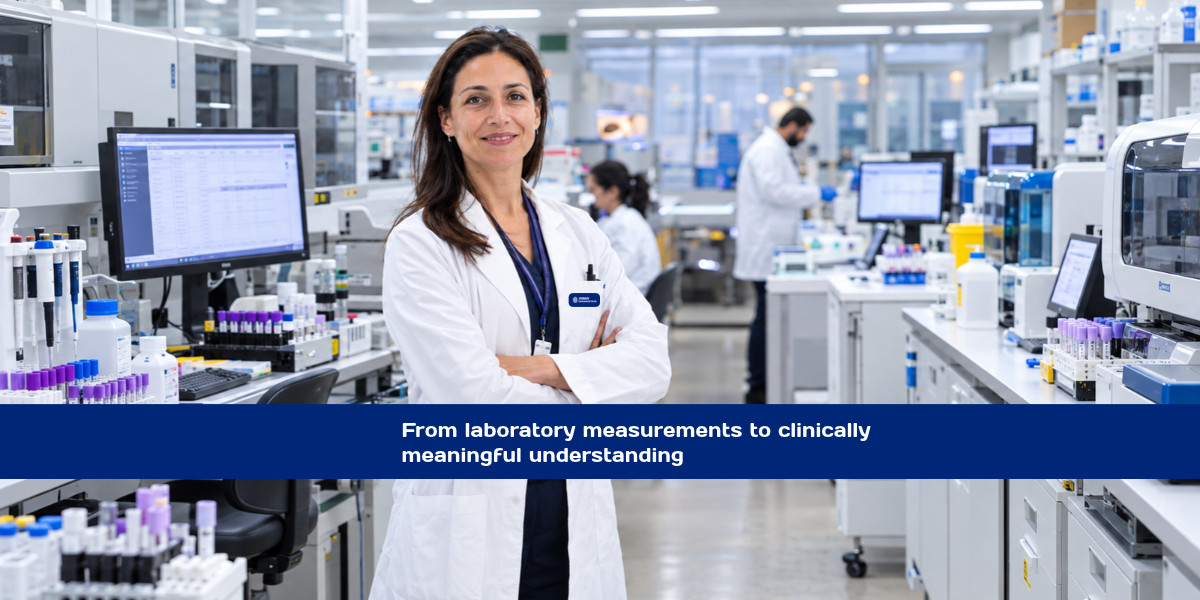
Why Measurement Alone Is No Longer Enough
Blood testing has always been strong on measurement and weak on explanation. Limited health literacy makes this worse: patients may panic over a single slightly abnormal value, ignore a pattern that actually matters, or turn to unreliable online sources for answers. Clinicians, meanwhile, spend valuable time reassembling results from different labs, different formats, and different dates before they can even begin a consultation.
The solution is not more measurement — it is a structured interpretation layer that sits between the laboratory report and the decisions that follow. This is exactly the space where aima diagnostics has focused its work: building AI blood test interpretation that transforms raw biomarker data into contextualized, longitudinal, and clinically cautious insight.
What an AI Interpretation Layer Actually Does
Normalizes Data From Any Source
Different laboratories use different units, naming conventions, and reference intervals. A robust interpretation system first normalizes incoming results so that values from separate labs and dates can be compared reliably — the essential foundation for everything that follows.
Analyzes Biomarker Relationships
Physiology rarely affects one parameter in isolation. Iron status gains meaning when viewed alongside inflammatory markers; glucose results carry more weight when considered with metabolic and hepatic values; lipid fractions are interpreted in relation to one another. AI-assisted analysis organizes these patterns without inventing speculative diagnoses, flagging relationships that deserve clinical review rather than jumping to conclusions.
Tracks Changes Over Time
A single snapshot can miss the story. By preserving and comparing longitudinal results, the system distinguishes an isolated deviation from a persistent trend — a change that may be invisible when reports are read separately. Patients also gain a coherent record of their diagnostic history they can carry forward.
Reports in Safe, Plain Language
The final report is written to be understood, not to impress. It separates findings inside and outside reference ranges, explains relevant biomarker relationships, highlights changes over time, and recommends appropriate next steps. Crucially, it operates under strict constraints: no unsupported diagnostic statements, controlled communication of uncertainty, and mandatory escalation language when a finding needs prompt clinical attention.
How Clinics, Labs, and Equipment Makers Benefit
For laboratories and clinics, the value is commercial as well as clinical. A published deployment case study documented a five-week rollout after which the repeat-visit rate rose from 12% to 16%, average revenue per patient increased by 20%, and complaints about unclear results fell by half. Extending the patient journey beyond the printed report builds loyalty and follow-up — provided that follow-up remains clinically appropriate.
For manufacturers of blood analyzers and point-of-care systems, AI for labs represents a genuine value layer. The interpretation capability can be bundled with new equipment or connected to installed analyzers, turning a measurement device into a complete reporting solution. In point-of-care settings, where results are often generated outside traditional laboratory environments, clear reporting and safe escalation pathways matter even more.
Clinician Oversight and Responsible Governance
What separates responsible AI for clinics from generic chatbot output is governance. Medical specialists participate in developing and reviewing interpretation logic, clinical language, and safety rules, while AI experts handle architecture, quality control, and model monitoring. Human oversight, traceability, conservative phrasing, and incident review are treated as part of the technology itself — not optional extras. This matters especially in demanding settings such as addiction medicine, where liver, inflammatory, metabolic, and nutritional markers interact in complex ways, and results must never be used to stigmatize or to infer a patient's behavior.
Building a Gold Standard, Not Just a Product
The most ambitious part of this work is the push toward a shared, independently verifiable evaluation standard for AI-assisted blood test interpretation. A credible standard must rest on four pillars: clinical concordance with qualified clinician assessments, comprehension testing with real patients, measured clinical and workflow outcomes, and structured safety and failure analysis. Reporting frameworks such as TRIPOD-LLM and STARD 2015 provide guidance for transparent studies involving large language models and diagnostic accuracy — because a gold standard cannot be declared, it has to be demonstrated through published, reproducible evidence, including unfavorable findings.
From Numbers to Understanding: The Future of Lab Reporting
The clinical value of a blood test has never depended on measurement quality alone — it depends on whether the result can be understood, contextualized, compared over time, and acted on safely. AI-assisted interpretation delivers that missing layer for patients who need clarity, clinicians who need efficiency, laboratories that want deeper patient relationships, and equipment manufacturers seeking to differentiate their products. With multidisciplinary expertise, international research collaborations, and an unwavering commitment to human oversight and evidence, aima diagnostics is helping define what trustworthy AI blood test interpretation should look like — and moving the entire industry closer to a true gold standard.