Professional Electronics Contract Manufacturing for High-Performance PCB Assembly and Product Development
Bringing an electronic product from an initial idea to a finished commercial solution takes more than a good design. Businesses must consider engineering requirements, component availability, circuit board specifications, assembly accuracy, and production planning. When a product involves complicated electronics or specialized materials, finding the right manufacturing partner becomes particularly important.
Electronics contract manufacturing provides companies with access to professional production capabilities without requiring them to establish and maintain every manufacturing operation themselves. From prototype development to complete product assembly, an experienced provider can help coordinate the technical and practical aspects of production. This is especially valuable for businesses handling multiple product designs, specialized circuit boards, and changing manufacturing quantities.
For organizations looking for an integrated production partner, Wintech PCB Assemblies offers full turnkey electronics manufacturing, customized material solutions, and PCB assembly services designed around different customer requirements.
Meeting the Challenges of Modern Electronics Production
Electronic products are becoming increasingly sophisticated. Manufacturers may need to work with high-density circuit boards, large physical dimensions, complex structures, and demanding electrical specifications. These requirements make production planning an important part of the overall development process.
A successful manufacturing operation must consider how the PCB design, selected components, materials, and assembly procedures work together. Even a small incompatibility can create problems during production or affect the performance of the finished device.
Customized manufacturing helps address these challenges by adapting the production approach to each project's actual needs. Rather than treating every circuit board as a standard assembly, manufacturers can consider the design complexity, intended application, and required production quantity before determining the appropriate workflow.
High-Mix Manufacturing for Different PCB Requirements
Businesses developing several electronic products often need a manufacturing partner that can handle different board designs and assembly specifications. High-mix electronics manufacturing provides this flexibility by accommodating multiple product configurations within a coordinated production environment.
This approach is useful for companies producing specialized equipment, industrial electronics, communication devices, and custom electronic systems. It also supports businesses that regularly introduce product revisions or work with customers who have different technical requirements.
Managing Multiple Product Configurations
Each PCB assembly may have its own component list, layout, dimensions, and production considerations. Managing these differences requires careful documentation and preparation. A structured manufacturing process helps ensure that the correct components and assembly procedures are used for each product.
Supporting Complex Electronic Designs
High-difficulty PCB projects may involve intricate layouts, numerous components, specialized materials, and demanding electrical connections. These projects benefit from engineering attention throughout the production process, beginning with design evaluation and continuing through final inspection.
Manufacturing flexibility allows businesses to pursue more specialized product designs while working with a provider capable of addressing their individual requirements.
High-Precision PCB Layout and Assembly Capabilities
The quality of a printed circuit board begins with its design. PCB layout determines component positioning, electrical pathways, and the overall arrangement of the circuit. These decisions influence how efficiently an electronic product operates and how successfully it can be manufactured.
High-precision PCB layout is particularly important when working with complex electronic systems. Design considerations may include signal integrity, power distribution, thermal management, component spacing, and manufacturing tolerances.
Accurate Component Placement
Correct component placement helps maintain the intended electrical connections and supports dependable circuit operation. Assembly procedures must follow the approved design specifications while accounting for the characteristics of individual components.
Material and Structural Considerations
Large-size boards and complex PCB structures may require specialized material choices and additional manufacturing planning. Evaluating these requirements early helps establish a suitable production process and reduces the possibility of avoidable complications.
Why Full Turnkey Electronics Manufacturing Is Valuable
Managing separate suppliers for circuit board manufacturing, component sourcing, assembly, and product integration can consume considerable time. It may also create communication challenges when different production stages depend on one another.
A full turnkey manufacturing service simplifies this arrangement by coordinating multiple activities through one provider. Customers can benefit from a more connected workflow instead of managing every supplier independently.
Depending on project specifications, turnkey manufacturing can include:
- Engineering consultation and project evaluation.
- PCB design and layout support.
- Customized material solutions.
- Electronic component sourcing.
- Printed circuit board assembly.
- Prototype development and testing.
- Low-to-mid-volume production.
- Mass manufacturing and complete product integration.
This integrated service model is particularly helpful for businesses developing complete electronic products or full systems that involve several manufacturing stages.
Customized Material Solutions for Better Production Planning
Materials and electronic components have a direct influence on the functionality, durability, and manufacturing requirements of a product. Different applications may require different board materials, component specifications, and supporting parts.
Customized material solutions help manufacturers accommodate these differences. Instead of selecting materials based only on standard production preferences, the manufacturing team can consider the customer's design specifications and intended application.
Component availability is another important consideration. Proper sourcing and material preparation help coordinate production activities and reduce the risk of delays caused by missing or unsuitable parts.
For businesses handling several PCB designs, effective material management can make high-mix manufacturing easier to organize and maintain.
From Prototype Development to Commercial Manufacturing
Different stages of product development require different manufacturing capabilities. A company testing a new circuit board may need only a small prototype quantity, while an established business may require regular production of larger batches.
Prototype Development and Testing
Prototyping gives businesses an opportunity to evaluate their electronic designs before committing to larger quantities. Initial assemblies can be used to assess functionality, component compatibility, physical construction, and other important specifications.
Identifying potential improvements during this stage can help reduce unnecessary changes later in the manufacturing process.
Low-to-Mid-Volume Production
Low-to-mid-volume manufacturing provides flexibility for companies that need more than a prototype but do not require mass production. It is suitable for specialized products, limited commercial releases, engineering projects, and businesses testing new market opportunities.
This production model also makes it easier to accommodate different product configurations and evolving customer requirements.
Mass Production Support
When a product gains market acceptance, production quantities may increase. Mass manufacturing requires effective material planning, consistent assembly procedures, suitable production capacity, and reliable inspection processes.
Working with a manufacturer that supports different production levels can help businesses prepare for growth without unnecessarily changing their manufacturing relationships.
How a Professional Electronics Manufacturing Workflow Operates
A dependable production process involves several coordinated steps. Although individual projects may have unique requirements, most electronics manufacturing workflows follow a similar structure.
Step 1: Understanding Project Specifications
The manufacturer reviews PCB files, technical drawings, component lists, board dimensions, and production expectations. This initial assessment helps establish the project's technical requirements.
Step 2: Engineering and Material Preparation
Design compatibility and material requirements are evaluated before production. Components are identified and prepared according to the approved specifications.
Step 3: PCB Assembly
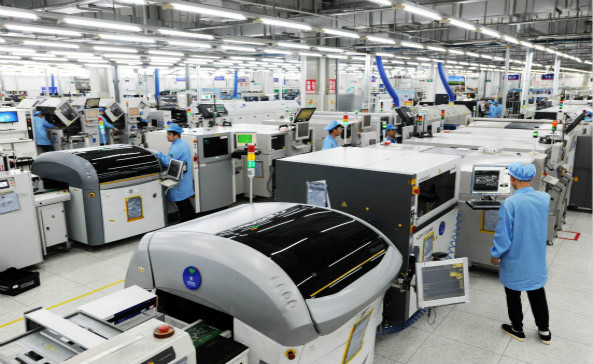
Electronic components are mounted onto the printed circuit board using appropriate assembly procedures. Accurate placement and controlled manufacturing practices help support consistent results.
Step 4: Quality Inspection
Completed assemblies are inspected according to project requirements. Depending on the application, this may involve visual inspection, electrical testing, and functional verification.
Step 5: Final Product Manufacturing
For turnkey projects, the process may continue beyond PCB assembly to include additional integration and complete electronic product manufacturing. This helps customers manage broader production requirements through a coordinated service.
What Makes an Electronics Manufacturing Partner Dependable?
Choosing a manufacturing provider is a long-term business decision. Companies should look for a partner that understands technical complexity and can adapt to changing requirements throughout the product lifecycle.
Experience with Demanding Projects
Manufacturing high-difficulty, large-size, and complex PCB assemblies requires suitable technical knowledge and production capabilities. Experience with different electronic applications can help a manufacturer address specialized customer requirements.
Flexible and Customer-Focused Services
Every business has different priorities. Some customers require advanced engineering assistance, while others need material sourcing, prototype development, or scalable production. Customized services help ensure that manufacturing arrangements reflect the actual project requirements.
Long-Term Cooperation and Consistent Support
Strong manufacturing relationships depend on reliable communication, consistent service, and the ability to support ongoing production needs. Many of the world's top 500 enterprises have maintained long-term cooperation with experienced manufacturing providers, demonstrating the importance of dependable technical and production support.
Creating Better Products with the Right Manufacturing Expertise
Successful electronics manufacturing combines precise PCB design, appropriate material selection, reliable component sourcing, and carefully managed assembly procedures. Businesses working with complicated electronic products need a production partner that can handle specialized requirements without sacrificing flexibility.
Full turnkey services make this process easier by connecting engineering, materials, PCB assembly, prototyping, and complete product manufacturing. When combined with high-mix capabilities and support for low-to-mid-volume and mass production, this approach gives businesses a practical way to manage different stages of product development.
With customized manufacturing solutions, advanced PCB assembly capabilities, and experience supporting customers across global markets, Wintech is a valuable option for businesses seeking dependable electronics contract manufacturing. Visit the official website to explore its services and discover how Wintech PCB Assemblies can support your next project with tailored engineering, precision manufacturing, and comprehensive turnkey production solutions.